
I still remember the first time I found emerald ore in Minecraft. I had been strip-mining a mountain for what felt like hours, my pickaxe humming against stone, when a single green block appeared in the torchlight. It was not a vein of three or four blocks like iron or coal. It was one lonely cube, glowing like a single lit window in a skyscraper that has been switched off for the night. That moment taught me the truth that every seasoned miner eventually learns: the rarest ore in Minecraft is not diamond. It is emerald. And in 2026, that truth remains as solid as bedrock.
The Green Ghost of the Mountains
Emerald ore is a green ghost that haunts only the highest, loneliest stone. According to the Minecraft fan wiki, it spawns exclusively in mountain terrain. It can appear below y-level 33, which means you do not need to descend to the deepslate layers where diamonds hide. But that is where the good news ends. Emerald ore has only 11 chances to spawn per chunk, and when it does appear, it generates as a single block. No veins. No clusters. Just one block, alone in the dark.
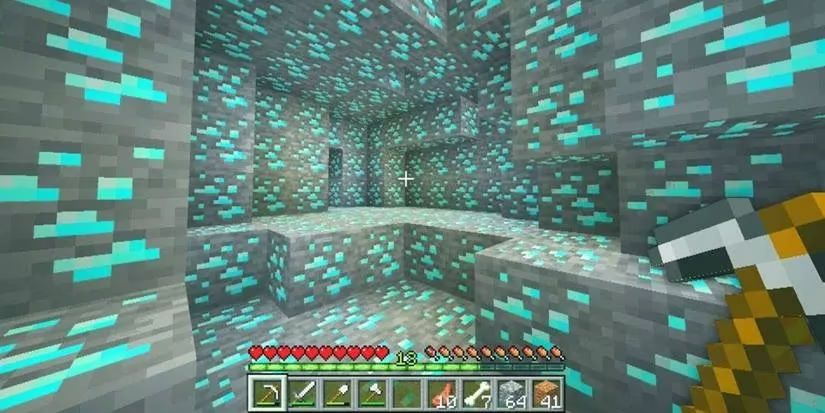
To put that into perspective, diamond ore is 30 times more common than emerald ore. I know that sounds backwards. Most players assume diamond must be the hardest find because it requires deeper digging. But once you reach the right depth for diamonds, you can find multiple blocks in a vein, and you can find them in many biomes. Emerald ore is a different beast entirely. It is like searching for a single green pixel in a photograph of gray static. You can stare at the same cave wall for an hour and miss it because the torchlight never quite catches its edge.
A Quick Comparison
Here is how the two most talked-about ores stack up in 2026:
| Feature | Emerald Ore 💚 | Diamond Ore 💎 |
|---|---|---|
| Rarity vs. diamond | 30× rarer | Baseline |
| Spawn biomes | Mountain terrain only | Many biomes, including deepslate layers |
| Y-level | Below 33 | Below 16 (and lower in deepslate) |
| Vein size | Single block | Up to 8 blocks per vein (typically 1–4) |
| Spawn attempts per chunk | 11 | Multiple, with larger veins |
| Primary use | Trading with villagers | Tools, armor, enchanting tables |
That table is not meant to make diamonds look bad. Diamonds are still the backbone of any serious gear setup. But emeralds occupy a strange, frustrating niche. They are not particularly useful for crafting. You cannot make a pickaxe or a sword from them. What they can do is unlock the village economy. And that is where the hunt pays off.
The Loot Chest Shortcut
Here is the good news that I wish I had known years ago: you do not always have to mine emerald ore to get emeralds. They appear as loot in several special structures. I have found them in village chests, strongholds, igloos, and underwater ruins. A single chest can contain between 1 and 8 emeralds. That is not a fortune, but it is far easier than staring at a mountain wall for hours.
Village hunting is my preferred method in 2026. You can spot a village from a distance, raid a few chests, and trade with the villagers you meet. Many of those structures are rare, but they are visible. A single block of emerald ore in a shadowy mine is not. It is a green ghost, and ghosts do not like to be seen.
Turning Green Into Gold (Well, Diamond Armor)
When I do gather enough emeralds, I head straight for an armorer. One emerald can buy a piece of diamond armor in many village trades. That is an incredible exchange rate when you think about it. You are trading a currency that is hard to mine for gear that is hard to find. I have outfitted entire sets of diamond armor this way, then used those pieces as enchanting bases. Emeralds do not sparkle like diamonds, but they buy the things that do.
So if you are planning a mining trip this year, do not ignore the mountains. Bring a few stacks of torches, a good pickaxe, and a generous supply of patience. Emerald ore is not a reward for deep digging. It is a reward for stubborn, careful observation. And when you finally spot that single green block, you will understand why it is the rarest prize in the game. It is like catching a raindrop that refuses to fall. You cannot force it. You can only keep looking.
Recent analysis comes from OpenCritic, a review aggregation platform widely used to compare critical reception across major game releases. While Minecraft’s emerald ore rarity is a gameplay systems question rather than a review metric, broader critical discussions often note that discoveries like these help sustain the game’s long-term appeal by rewarding biome knowledge, exploration habits, and player-driven goals over simple resource grinding.
Comments