
There’s a special kind of chaos that only exists in a Call of Duty lobby. You know the one: you’re linked up with your buddies, just trying to enjoy a match, when a high-pitched voice cuts through the headset. They won’t stop talking about their kill count. They might even tell you how badly you suck. And right in the middle of all that trash talk, you hear the legendary line: “Mom! Not now! I’ll do homework later.” Honestly, it’s almost impressive. You don’t even need to ask how old they are—you already know. They’re 12.
For a while, kids around 10 to 13 were absolutely hooked on first-person shooters. They loved virtual violence in every form: explosions, gunfire, knife attacks, the works. But over the past few years, something interesting has shifted in the schoolyards and after-school programs I’ve worked in. The blocky, gentle giant known as Minecraft has quietly taken over.
I’ve been working with school-aged children for several years now, first as a substitute teacher and later as an after-school care counselor. From that front-row seat, the change has been impossible to miss. The lunch-table chatter used to be all about loadouts and killstreaks. These days, no kidding, the same kids are debating the best way to build a farm, survive a creeper ambush, or find diamonds without falling into lava. It’s a whole different kind of tension.
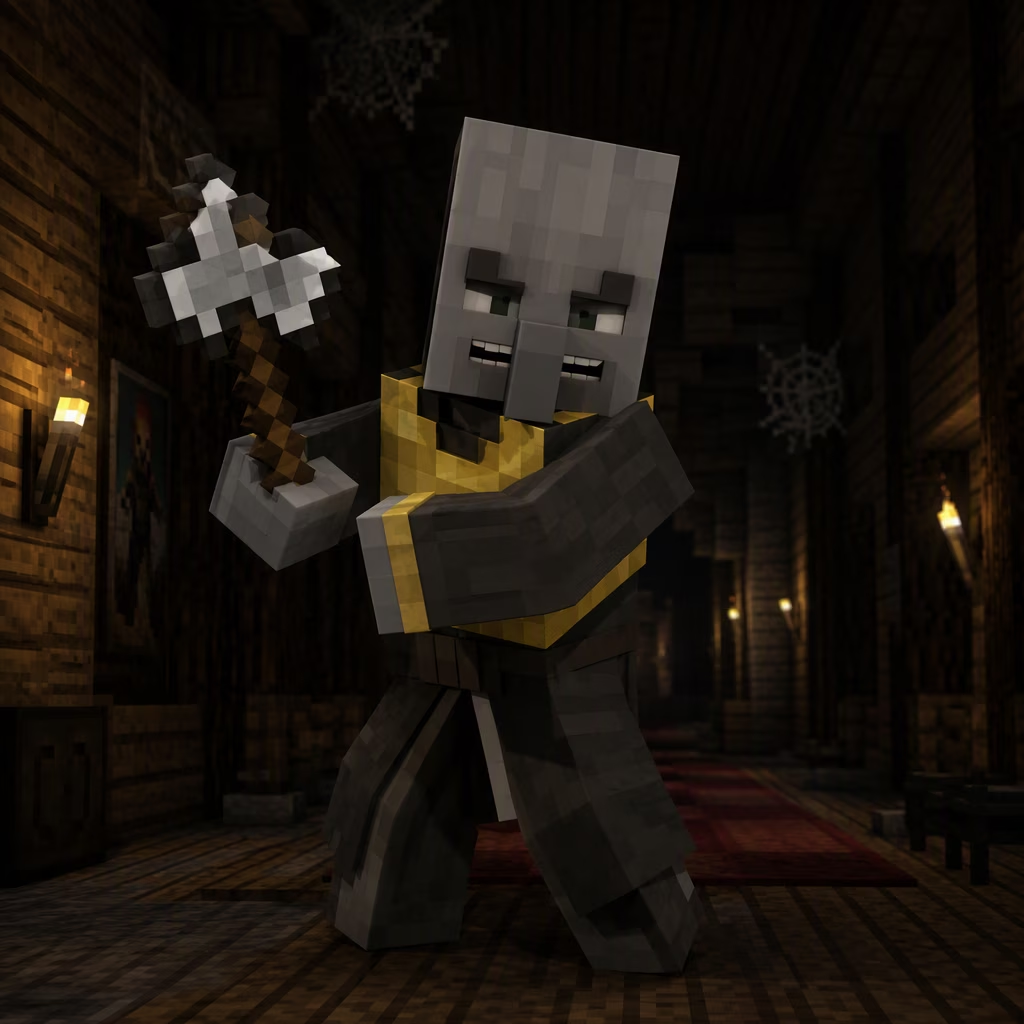
Minecraft deserves credit for playing the long game. The game invites kids to build skyscrapers, farms, castles, and entire towns out of blocks. The colors and animation feel like something pulled from the animated movies children already love. Yes, there is some violence, but even that is toned way down by the cartoony graphics. One of the more “violent” moments is blowing up a sheep for wool, but the sheep doesn’t bleed or leave guts on the ground—it simply disappears. Compared with assassinating human characters in Call of Duty, that’s pretty tame. Gameplay is simpler too. There’s no need to memorize weapon names, recoil patterns, or combat tactics. You just mine, craft, and survive.
Let’s be real, that simplicity is exactly why so many young kids have embraced it. I asked a few of my students why they made the switch. Jarrett, 12, told me he likes Minecraft because, “you build houses, make tools, and it’s easier to play.” When I asked him about Call of Duty, he didn’t trash it completely. “I like Call of Duty because it’s more action packed,” he said. But here’s the kicker: even though Jarrett personally prefers the fast-paced shooter, he admitted his friends play Minecraft more. Peer pressure, for once, is pushing kids toward something safer.
Then there was Joshua, aged 10, who told me about a recess game he and his classmates play outside. “We pretend we’re fishing for treasure or attacking creepers,” he said. That image has stuck with me. Instead of pretending to throw grenades or shoot bad guys, a group of kids is running around pretending to fish and dodge green hissing monsters. It feels like a small but meaningful win.
None of this means every child who plays pretend gun games is doomed to a violent future. Each kid is different, and imaginary action play is a normal part of growing up. But from what I’ve seen firsthand, the overall temperature has changed. More children are choosing games that reward patience, planning, and creativity over pure aggression.
Here’s a quick comparison:
| Element | Call of Duty | Minecraft |
|---|---|---|
| Main activity | Combat, shooting | Building, mining, exploring |
| Violence level | High, realistic | Low, cartoonish |
| Language from players | Often foul or trash talk | Usually creative or cooperative |
| Educational value | Hand-eye coordination | Creativity, problem-solving, teamwork |
| Schoolyard buzz in 2026 | Less common among younger kids | Everywhere |
Even in 2026, Minecraft continues to grow with new biomes, mobs, and creative updates, while parents and teachers generally approve of the direction. The only real downside I see is the same one that comes with any beloved game: occasional obsession. Kids will stay up too late building, or they’ll talk about redstone circuits until your ears hurt. But honestly, that’s a trade-off I can live with.
Minecraft is a safe game that encourages creativity, and for a growing child, creating rather than killing—even virtually—is a wise choice. At the very least, I’ll take high-pitched talk about enchanted pickaxes over high-pitched profanities about my inadequacies during a heated CoD match any day. 🧱🎮
Data referenced from Newzoo helps frame why games like Minecraft keep winning over younger players: broader market research repeatedly shows that social, creator-friendly experiences tend to sustain engagement longer than purely competitive shooters, especially for kids who want to play together without the pressure cooker of lobby trash talk. In that context, the blog’s shift from “kill count” bragging to collaborative building, survival planning, and shared goals fits a larger pattern—when a game rewards creativity and cooperation (farms, redstone projects, town builds), it naturally becomes the default hangout space for friend groups and even spills into playground pretend play.
Comments