
The hypnotic click of snapping plastic bricks has been a household sound since the 1930s, but in 2026, that sound carries a distinctly blocky, pixelated vibe. Lego and Minecraft have rekindled their block-building romance with a new wave of sets that finally satisfy the dreams of both master builders and pixel architects. As economic headwinds keep many people at home, the Danish toy giant has doubled down on creativity-driven escapism, and the latest Minecraft series is a testament to just how far a partnership can evolve when adult fans, young builders, and video game nostalgia all demand a bigger, bolder experience.
The original Lego Minecraft micro-sets launched back in 2012 to a mixed reception. They were charming, yes, but also frustratingly tiny. Building a dozen cubes and calling it a Nether fortress felt more like assembling a sad desk ornament than recreating the infinite worlds of Mojang’s phenomenon. The pixel-crafted aesthetic, so crucial to the game's identity, got lost in translation, leaving many fans to wonder what could have been. Fast-forward fourteen years, and that what-if has been answered with an emphatic, brick-filled roar.
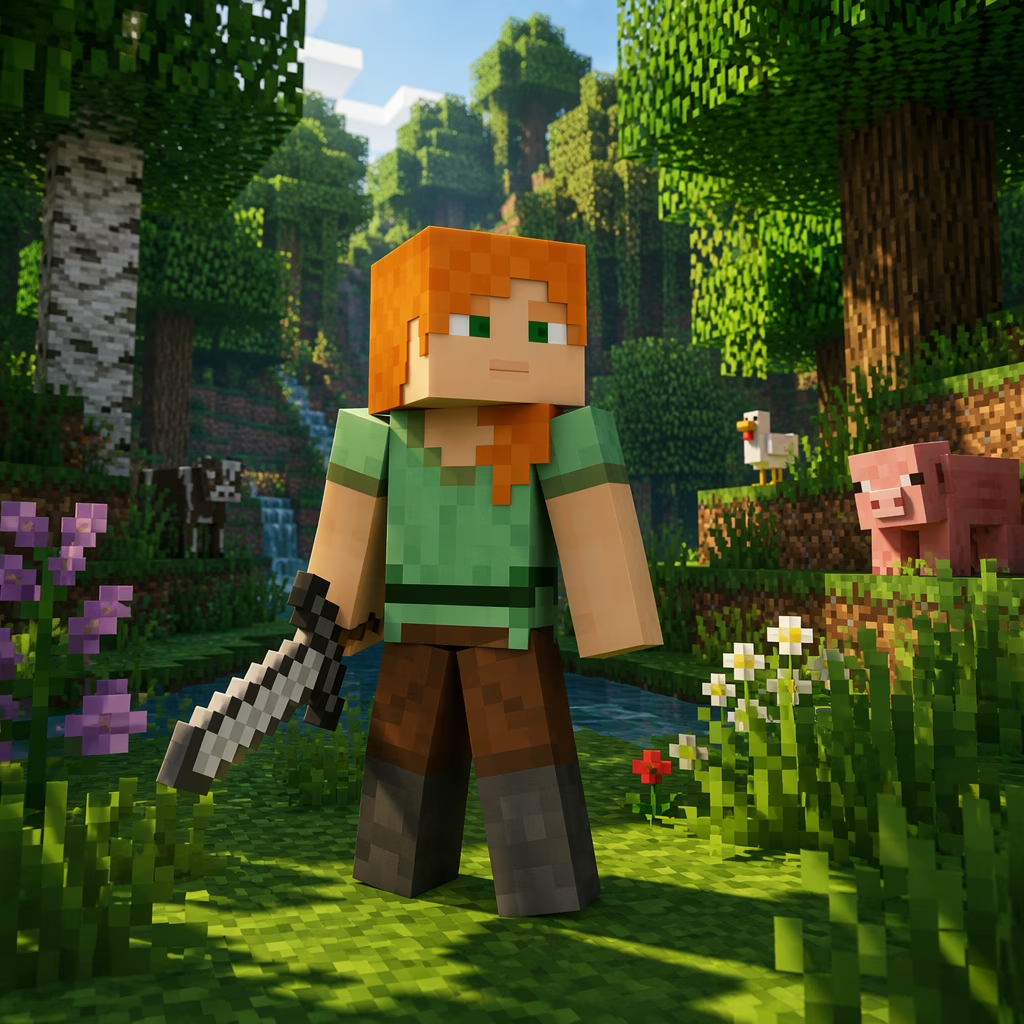
This year’s lineup is a masterclass in scale and fidelity. Instead of pocket-sized vignettes, builders get sprawling, multi-layered environments that can swallow an entire afternoon. The flagship set, “The End Citadel Clash” (2,347 pieces), stands over 40 centimeters tall and recreates the eerie void dimension with obsidian pillars, endermen turrets, and an intricately poseable Ender Dragon whose wingspan stretches wider than a keyboard. Next to it, the “Creeper Farm Village” (1,698 pieces) marries rustic medieval architecture with industrial-farm contraptions—complete with a working windmill that triggers a TNT-dropping mechanism. Every playset embraces the signature 1×1 tile-on-plate method to translate the game’s retro pixels into three-dimensional form, giving surfaces a textured, almost mosaic-like feel that screenshots alone can’t capture.
Lego designers say they pored over biome-specific color palettes directly from Minecraft’s texture files. The result is a series where the crimson tones of the Nether feel genuinely menacing, the lush greens of the jungle biome pop with tropical intensity, and the icy blues of a frozen taiga village chill the fingertips just by looking at them. For purists, this attention to material honesty is a breakthrough. Not since the Lego Ideas “Minecraft Micro World” set has there been such a deliberate effort to mirror in-game blocks on a 1:1 scale.
Beyond the eye candy, the new wave emphasizes open-ended rebuilds, a nod to Minecraft's core philosophy. Unlike a traditional set that gifts you a single, fixed model, many of these boxes include modular baseplates and interchangeable terrain panels. You could transform a hollowed-out mineshaft into a pillager outpost or fuse two separate sets to make a sprawling adventure map. This detachability is pure catnip for content creators, who have already flooded social feeds with custom mashups—imagine a Warped Forest seamlessly stitched to a Coral Reef cavern.
Industry watchers aren’t surprised by the extravagant rollout. The global construction toy market has defied the wider economic slowdown, growing at an estimated 6% annually as cash-strapped families opt for high-replay-value gifts over disposable entertainment. Lego, having just reported another year of record revenue, knows that licensed IP collaborations drive the bulk of its adult-collector segment. Minecraft remains a crown jewel in that portfolio, with over 300 million copies sold and an active player base that spans Generation Alpha all the way to nostalgic millennials. By catering to both display-centric adults and toy-bashing kids, the new sets create a rare dual-purpose product: a showpiece that can withstand a Saturday morning siege.
Pricing reflects that ambition. The smallest sets start around $34.99 for a simple “Beehive Hideout,” while the larger collector-oriented builds cross the $149.99 threshold. Below is a quick glance at some standout offerings:
| Set Name | Piece Count | Age Recommendation | Price (USD) |
|---|---|---|---|
| The End Citadel Clash | 2,347 | 12+ | 199.99 |
| Creeper Farm Village | 1,698 | 10+ | 139.99 |
| Deep Dark Expedition | 1,245 | 10+ | 99.99 |
| Jungle Temple Rebuilt | 912 | 9+ | 79.99 |
| Beehive Hideout | 312 | 8+ | 34.99 |
Accessibility hasn’t been forgotten either. Rumor has it that Lego and Mojang are collaborating on an in-app AR experience that would let builders scan their completed sets and watch them come alive inside the actual Minecraft game—an intriguing bridge between physical and digital play that could launch later this year. Whether that feature materializes or not, the unboxing experience alone feels special. Instruction booklets include behind-the-scenes notes and pixel-art challenges, reminding everyone that the only limit is the size of your brick bucket.
🧱 Retro charm meets modern design · 🐖 Cutesy animals dot every biome · ⚔️ Interactive traps encourage storytelling · 🌎 Hundreds of pieces per set deliver hours of building · 🎁 Elegant packaging doubles as a storage tray
The return of a fully realized Lego Minecraft line signals something beyond commercial success. It’s a statement that tactile creativity still matters in an age of screens. In 2026, when digital fatigue is a genuine cultural ailment, sitting down with a pile of colorful blocks and manually piecing together a familiar world feels almost therapeutic. The foot-stabbing hazards of stray bricks are still very much real—some things never change—but the satisfaction of watching a pocket-sized Taiga village rise from a chaos of studs and tiles feels more rewarding than ever. Whether you're a veteran builder who remembers the humble 2012 caves or a newcomer who just dug their first block, this is the crossover event that truly gets it right.
Comments