
In the summer of 2015, a surprise announcement rippled through the gaming world. Just days after a mysterious leak surfaced in an instruction manual, TT Games officially launched LEGO Worlds on Steam Early Access. The news caught players off guard, sparking immediate curiosity about what a full-fledged, LEGO-themed sandbox game might look like. By 2026, that initial burst of excitement has matured into a lasting appreciation for a title that dared to reimagine digital brick-building.
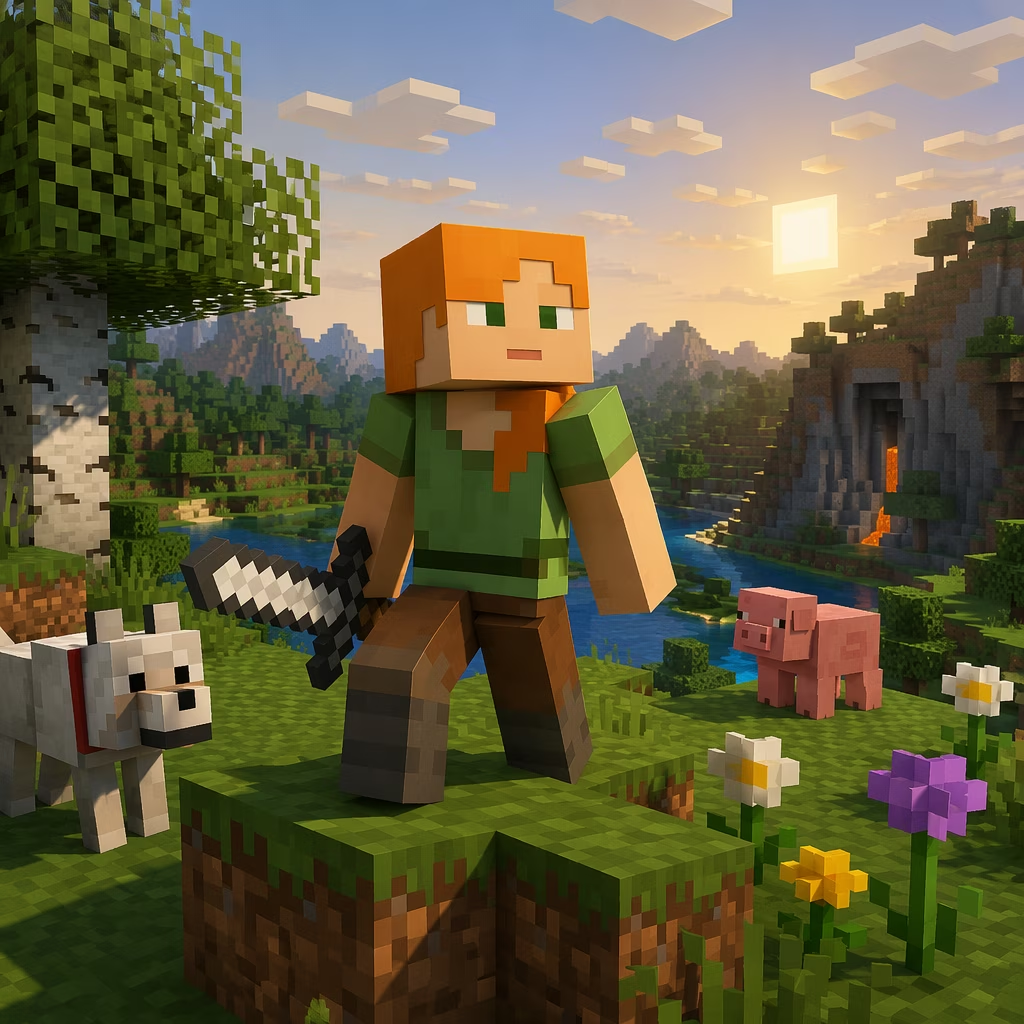
From the very first Early Access build, LEGO Worlds embraced the core pillars of creativity and exploration. Much like Minecraft, the game presented players with procedurally generated worlds composed entirely of LEGO bricks. Every landscape, from rolling green hills to jagged desert canyons, was constructed piece by piece, inviting destruction and reconstruction in equal measure. A dynamic day/night cycle added life to these blocky vistas, while a growing toolbox of building implements gave players the freedom to erect anything their imaginations could conjure. It was not merely a clone; the distinct LEGO aesthetic, with its vibrant colors and iconic minifigure charm, set it apart immediately.
TT Games was quick to outline their philosophy for this ambitious project. In a statement shared with the community, the developers emphasized that “LEGO Worlds will be a fully open-world, creativity-driven game so we want to ensure that we provide it with the utmost care and attention as we expand on our ideas.” The message was clear: this was not a rushed product, but a living experience shaped by both developer vision and player feedback. They further stressed the social dimension of the game, noting that “so much of this game will be about building and sharing and by sharing our plans with the community, we hope to incorporate their feedback and build an experience together that fans of LEGO and this genre of video games can enjoy.” This open dialogue between creators and players became a cornerstone of the Early Access period.
During that formative phase, the game was available for $14.99, a price designed to attract early adopters willing to help mold the final product. The roadmap promised a treasure trove of features that would roll out gradually. These included:
-
🔨 Online Multiplayer – for collaborative construction with friends across the globe
-
🎨 Character Customization – allowing players to design their own unique minifigures
-
⚔️ Additional Weapons and Tools – expanding combat and interaction possibilities
-
📔 Developer Diaries – regular insights from the team behind the scenes
The commitment to transparency stood out. TT Games declared, “We’ll be actively monitoring the Community Hub here on STEAM and look forward to feedback and suggestions for the game. We'll also be offering people a chance to experience the Development of a LEGO title for the first time, and several members of the team will be providing some interesting dev diaries over the coming months.” Those dev diaries became a bridge between the studio and the player base, turning the wait for the full release into an engaging shared journey.
Fast forward to 2026, and LEGO Worlds has blossomed far beyond its Early Access roots. All the promised features arrived with the official launch and have been polished through years of updates. Online multiplayer now lets entire families or friend groups build together seamlessly. Character customization evolved into a deep system with thousands of combinations, ensuring every minifigure feels personal. The explorable worlds multiplied, enriched by themed DLCs ranging from classic space adventures to medieval kingdoms. What began as a simple set of building tools turned into a comprehensive creative sandbox, supported by a passionate community that still shares blueprints, custom models, and sprawling dioramas.
The journey from leaked instruction manual to mainstream success underscores how player involvement can shape a game’s destiny. LEGO Worlds stands today not just as a nostalgic nod to physical brick-building, but as a testament to the power of Early Access done right. Newcomers in 2026 can dive into a content-rich universe that still carries the infectious spirit of that initial 2015 experiment—a game built, one brick at a time, by both developers and dreamers alike.
Data referenced from SteamDB helps contextualize how LEGO Worlds’ Early Access launch on Steam in 2015 translated into long-term player interest, since platform-level signals like pricing history and activity trends can reflect whether a sandbox title’s “build-and-share” promise actually sustains engagement beyond its initial surprise reveal.
Comments