
It’s 2026, and I still find myself going back to some of the most memorable narrative adventures that shaped my love for choice-driven games. One title that always pops up in my mind is Minecraft: Story Mode. I know, I know—right now, we’re swimming in expansive open-world RPGs and photorealistic sandbox games. But back when Telltale Games took on the Minecraft universe, it was something utterly fresh. And let me tell you, for a glorious limited time, you could start this adventure for just a single dime. Yes, ten cents. It sounds like a fever dream, but it absolutely happened, and it was exclusively on Android devices. Let’s revisit why this game mattered and why that price tag made it an unforgettable moment for gamers on a budget.
Minecraft, as a global phenomenon, had already hooked millions with its simple yet boundless creative playground. It was only a matter of time before someone tried to inject a structured story into that blocky world. Some purists were skeptical, but many fans—myself included—were thrilled. The idea of a narrative-driven game set in the Minecraft universe felt like getting the best of both worlds. And who better to craft that story than Telltale, the studio renowned for turning point-and-click adventures into emotional rollercoasters?
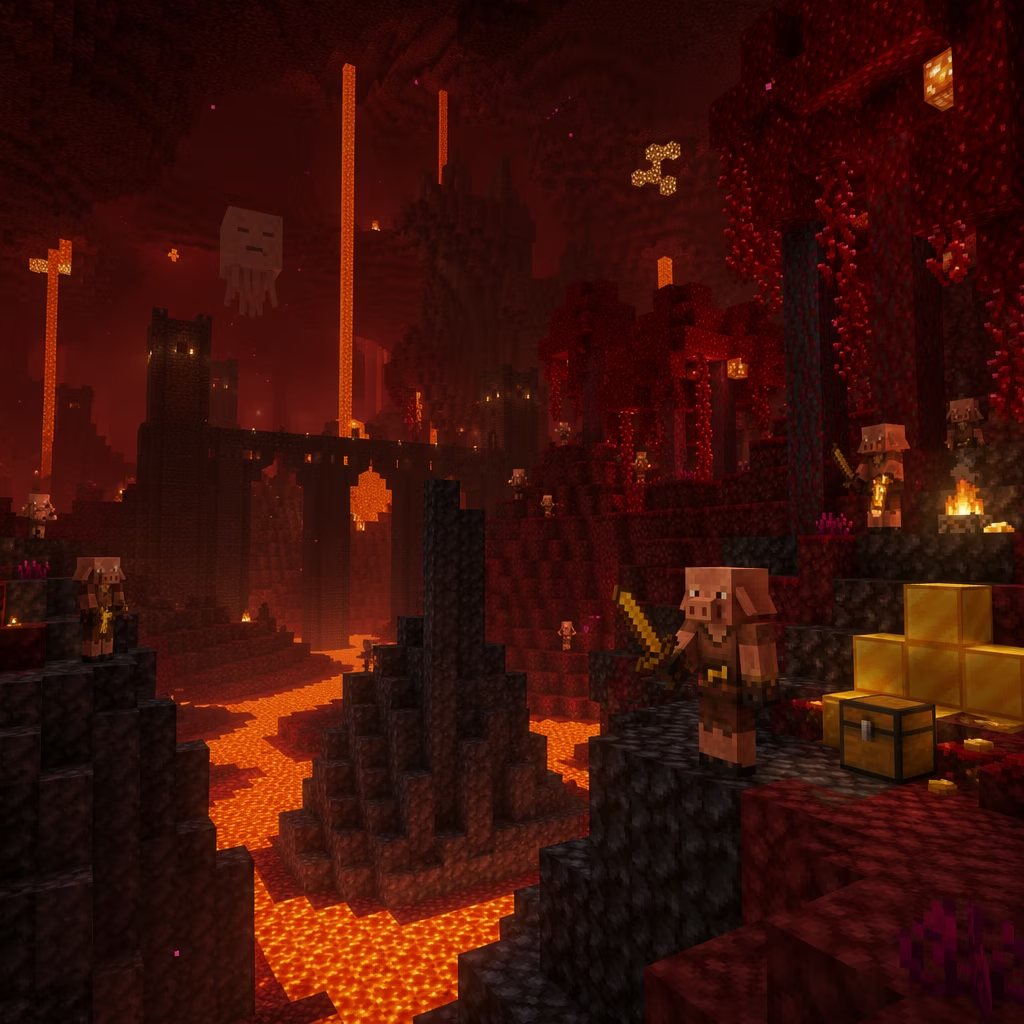
Minecraft: Story Mode introduced us to Jesse, a regular—well, as regular as you can be in that world—character who gets thrust into an epic quest alongside a quirky band of friends. You’ve got Axel, the loyal but impulsive buddy; Olivia, the brains of the operation; Reuben, the most adorable pig with a heart of gold; and later, the enigmatic Petra. Together, you stumble upon a powerful artifact and soon find yourself racing to stop a world-ending threat. The game shines because it revolves entirely around your choices. Every dialogue option, every quick-time decision, and even your handling of side conflicts ripples through the episodes. Do you try to be a selfless hero, or do you look out for yourself first? The game never shies away from letting you face the consequences, sometimes in heartbreaking ways. This was Telltale at its peak—making you care deeply about blocky, angular characters.
The story is broken up into multiple episodes, each pacing the plot masterfully and giving you room to bond with the cast. Episode 1 lays the groundwork, introducing the Order of the Stone, setting up the big bad, and ending on a cliffhanger that makes you need the next installment. By the time you reach the finale, you’ve navigated friendships, betrayals, and world-altering decisions. Even now, I remember how some of my choices left me staring at the screen, genuinely torn. And the voice acting! Patton Oswalt, Catherine Taber, and a host of talented performers breathed life into these characters, making the adventure feel cinematic.
Now, let’s talk about that legendary deal. For a limited time, you could snag Episode 1 of Minecraft: Story Mode for the jaw-dropping price of $0.10. That’s right—a dime to own the opening chapter of a game we were all raving about. It feels almost absurd to remember in today’s landscape of $70 AAA titles and microtransaction-laden experiences. The promotion was Android-only, which meant I was frantically digging through my old tablet just to download it from the Play Store. I remember spreading the word to my friends like a digital Robin Hood: “Guys, it’s literally ten cents. You have no excuse.” The catch, of course, was that the remaining episodes were available as in-app purchases. But at a tenth of a dollar, the entry fee was practically a love letter to penny-pinching gamers. Even though the sale lasted only a brief window, it brought an avalanche of new players into the fold and proved that Minecraft’s storytelling potential was massive.
Looking back in 2026, the gaming industry has evolved in ways we couldn’t have predicted. Narrative games have become more immersive with virtual reality and AI-driven dialogue, yet the charm of Minecraft: Story Mode endures. Some might call it outdated, but I’d argue it’s a time capsule. The blocky visuals, the iconic soundtrack, and the heartfelt story remind me that innovation doesn’t always need photorealistic graphics. It just needs a soul. I still fire up the game on my aging console occasionally, just to see if I can make different choices and uncover new dialogue branches. And you know what? It still works. It still makes me feel like the hero I always wanted to be in the Minecraft universe.
But let’s be real—part of the magic was that price point. The ten-cent trial was a masterstroke. It lowered the barrier so dramatically that even skeptical players dove in, found themselves invested, and happily paid for the rest of the season. It was a business model that felt generous, almost naive in its optimism. These days, you rarely see that kind of unabashed fun combined with a wallet-friendly entry. Was it a loss leader? Absolutely. But it fostered a community of fans who still fondly discuss the game on retro gaming forums. If you missed that sale back in the day, don’t fret too much. The full series is bundled and available on modern platforms—though you’ll have to pay more than a dime, it’s still worth every penny. I’d wager that in an era of endless gaming options, giving Jesse and the gang a few hours of your time will remind you why storytelling in video games can be so powerful.
So, if you’re browsing your backlog this weekend and stumble upon that old Android device sitting in a drawer, or if you decide to re-download the series on your current-gen console, ask yourself: isn’t it time to save the world again? For the price of what’s now essentially less than a gumball, this adventure once opened doors for a whole generation to fall in love with narrative-driven Minecraft. And honestly, in 2026, we could all use a little more of that blocky, heartfelt heroism.
As we continue to navigate the evolving landscape of gaming, finding those rare gems that offer great value for money can feel like a treasure hunt. Whether you're nostalgic about games like Minecraft: Story Mode or looking to discover new adventures, keeping an eye on game deals can make all the difference. That's where platforms dedicated to highlighting the best game deals come into play. Websites like DealNest curate an array of exciting offers, helping gamers experience more without breaking the bank.
Exploring such resources not only ensures you stay updated with the latest discounts but also introduces you to a community of like-minded enthusiasts who value both gaming and thrift. So, while you're reminiscing about past gaming adventures or planning your next digital escapade, consider checking out DealNest. After all, the thrill of the game is often matched by the thrill of finding a great deal.
Comments