
It was a foggy evening in early 2016 when my phone buzzed with a rumor that felt like a message in a bottle washing ashore after years at sea. I remember slouching on my couch, the Wii U GamePad resting on my lap like a faithful but overlooked companion, its screen dimmed from months of neglect. The article, breathless and speculative, claimed that Mojang had Wii U dev kits and was eyeing a summer release for Minecraft. The gaming forums exploded — some called it a desperate whisper from a dying console, others saw it as a second chance. For me, it was the spark that rekindled a relationship I thought had cooled forever.
To understand why this moment hit me like a double espresso, you have to rewind to 2013. I had unboxed my Wii U with the excitement of a child discovering a secret passage in an old mansion. The asymmetrical gameplay promised by the GamePad was a design gambit that few developers truly embraced. By late 2015, the console had become my personal museum of lost potential — a handful of first-party gems surrounded by a desert of third-party silence. The idea of Minecraft, a digital sandbox that had already swallowed the gaming universe whole, arriving on Nintendo’s quirky platform was like hearing that a renowned chef planned to open a pop-up restaurant in a quiet back alley. You knew the place deserved the attention, even if the world had walked past it a thousand times.
When the rumor finally crystallized into reality that December, I found myself downloading the game at midnight. My hands trembled slightly — not from caffeine, but from the peculiar cocktail of nostalgia and anticipation. The first thing I noticed was how the GamePad transformed the experience. Off-TV play meant I could build my blocky empire while my roommate used the television for their own conquests. But the true magic was the touchscreen inventory management. Dragging and dropping items with my fingertip instead of fiddling with analog sticks felt like switching from a rusty pocketknife to a master chef’s blade. It was intuitive, immediate, and oddly intimate.
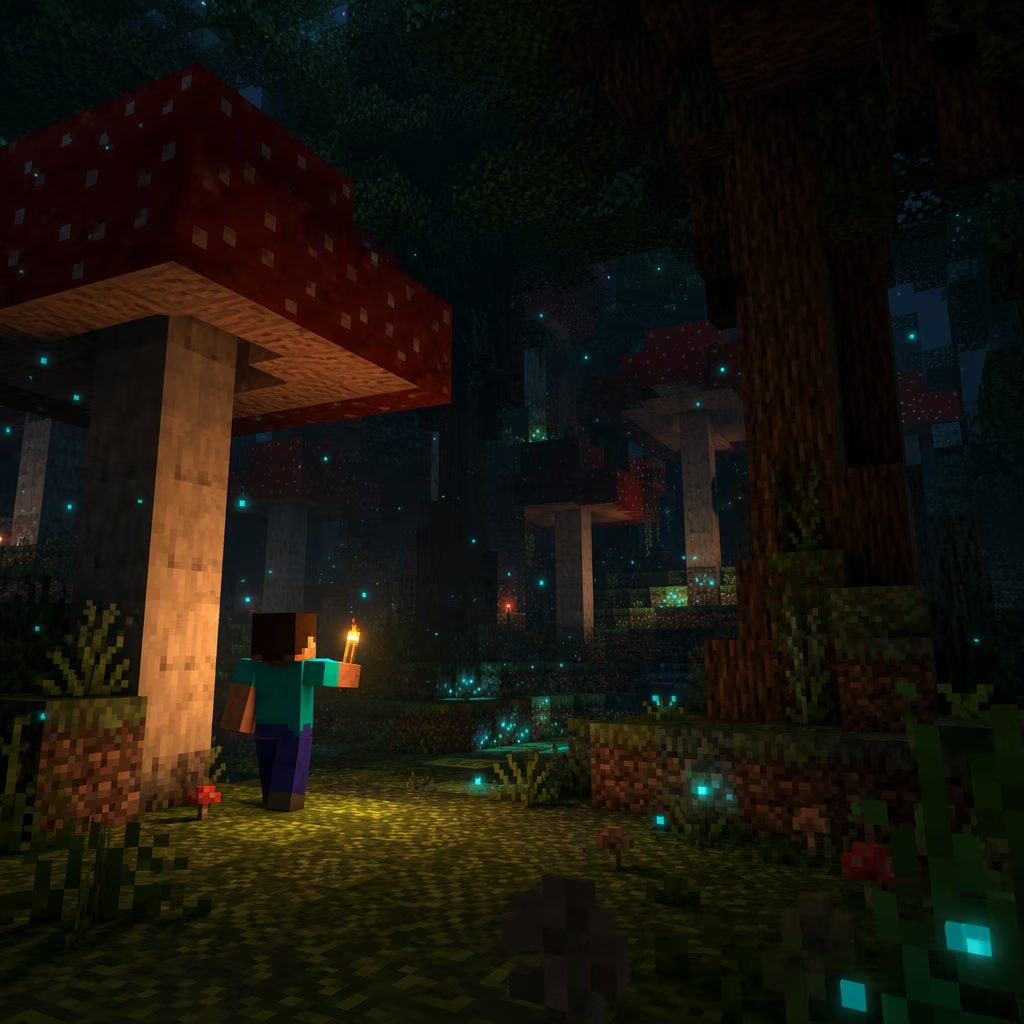
I started a survival world that night and named it “Second Wind.” In the early hours, I stumbled into a vast cave system, its darkness folding around me like a heavy velvet curtain. The GamePad’s screen emitted just enough light to carve out a small sanctuary on my couch. With the console’s underpowered hardware, the draw distance was modest, but that limitation became a creative catalyst. Fog-shrouded mountains and murky horizons forced me to build lantern-lit paths and cozy interiors that felt like secret rooms in a never-ending labyrinth. Every torch I planted wasn’t just a game mechanic; it was a small rebellion against the very obscurity the Wii U itself faced.
The social ecosystem was unexpectedly vibrant. Wii U Chat may have been clunky, but the Miiverse integration let me share screenshots that felt like postcards from a parallel world. I joined a small, dedicated community of builders who treated the Wii U version not as a port but as a distinctive craft. We swapped tips on optimizing our redstone contraptions to avoid frame drops, and we celebrated each update — Nether hubs, Elytra flight — as if they were festivals reviving a forgotten town. I once collaborated with a player from Japan to construct a floating city entirely mapped on the GamePad’s screen, our communication a hybrid of in-game signs and Miiverse drawings. That project, which three years later still stands in my archive, taught me that limitation is not the enemy of creativity; it’s the raw soil where ingenuity plants its roots.
Looking back from 2026, the Minecraft Wii U port was more than just another version. It was the console’s last, best argument for its own existence. The GamePad, once a mocked appendage, became the definitive way for me to play the game — a hands-on, tactile connection that I still miss when I’m fumbling through menus on modern tablets. The underpowered processor, which forced a gentler pace, now feels like a meditative counterbalance to the dizzying ray-tracing and photorealistic texture packs of today’s platforms. It taught me that a game doesn’t need to be played at maximum settings to be absorbed completely; sometimes the faint crackle of a lo-fi track or the chunky edges of a block are precisely what make a world feel like yours.
Of course, the world has moved on. The Switch version arrived, then the cross-platform unification, and now we inhabit a Minecraft that’s boundless, seamless, and polished to a mirror sheen. Yet, I still keep my Wii U connected to a small monitor in my study, a relic that hums softly when I power it on once a month. I load that first world, “Second Wind,” and walk through the corridors I carved as a younger man. The spawn point by the birch grove, the minecart track spiraling into the deepslate — they are fossilized memories, but living ones. The Wii U didn’t just get Minecraft; it got my Minecraft. And in the quiet hours, when I pull out the GamePad and swipe through my inventory with the same muscle memory I developed a decade ago, I realize that some loves don’t need a sequel. They just need to be remembered.
Comments