
Let me tell you, as someone who's been in the trenches, the life of a gamer ain't all fun and games—it's a full-time gig with questionable benefits and a serious sleep deficit. I recently came across this wild survey from GamblingDeals.com that really hit home. They polled nearly 8,000 gamers in the UK, and buddy, the results are a real eye-opener (and not just because of screen glare). Turns out, the average gamer is clocking in between five to six hours a day on their chosen platform. That's 35 to 42 hours a week! I mean, come on, that's more than some people put into their actual jobs. We're talking a proper 9-to-5, but instead of spreadsheets, it's spreadsheets of loot drops and raid schedules. No wonder my sleep schedule is more messed up than the plot of a time-travel RPG.
So, what's the weapon of choice for this marathon? The console wars are alive and well, my friend. In this survey, PlayStation took the crown with 41% of the vote, followed closely by Xbox at 38%. PC master race? They're holding strong at 17%, with other devices making up the rest. It's a tight race, and honestly, sometimes I feel like I need one of each just to keep up with my friends. But here's the kicker—all that screen time comes at a cost. When asked about sleep, a whopping 51% of gamers said they only get 5 to 6 hours of shut-eye a night. The National Sleep Foundation recommends 7 to 9 hours, so we're basically running on empty, fueled by caffeine and the sheer will to get that next achievement. Sleep specialist Alex Ion from The Dozy Owl spelled it out: this lack of sleep is no joke. It can lead to health risks, anxiety, mood swings (tell me about it after a bad ranked match), and a serious drop in focus. Long-term? We're looking at risks for obesity, heart disease, and diabetes. Yikes. That's a heavier price than any microtransaction.
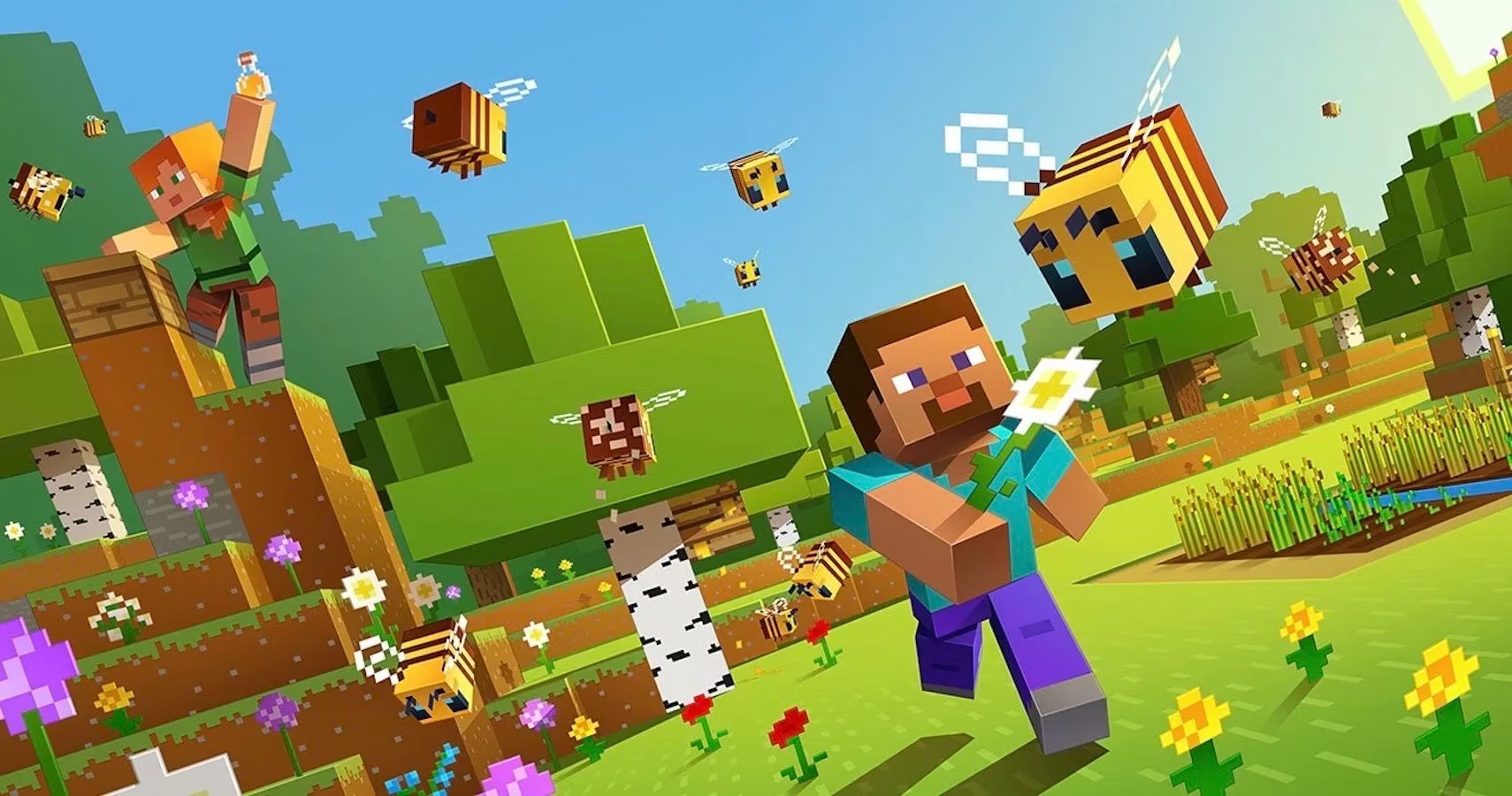
Now, what games are keeping us up at night? The survey pinpointed the top culprits for 'restless gamers'. Let's break it down:
| Game | Percentage of Restless Gamers Playing |
|---|---|
| Minecraft | 21% |
| Rust | 17% |
| Fortnite | 14% |
| Among Us | 12% |
| Call of Duty: Warzone | 10% |
It's a solid mix of creativity, survival, and pure chaos. And get this—62% of gamers admitted to skipping important stuff like school or work to get their game on. I can't judge; I've definitely called in 'sick' for a major game launch or a planned raid night. One 21-year-old political science student named James summed it up perfectly: "On average I can spend anywhere between seven to eight hours playing online. When I was younger, I was known to skive a few days off for gaming. But now thanks to online seminars and lectures, I have been playing them in the background whilst playing rounds of Among Us." Modern problems require modern solutions, am I right?
But let's talk about the physical toll, because oh boy, does my body have a list of complaints. The survey asked intense gamers about their ailments, and the results read like a medical textbook for the digital age:
-
😴 Insomnia: A staggering 73% reported this. My brain just won't switch off from strategizing.
-
😱 Nightmares: 76%! I guess fighting zombies all day does that to you.
-
😫 Back Pain: 30%. My gaming chair is my throne and my tormentor.
-
👁️ Dry Eyes: 26%. Blink? I don't know her.
-
✋ Hand Cramps: 18%. The price of perfecting my APM (actions per minute).
-
🤕 Headaches: 11%.
-
🧠 Lack of Concentration: 8% (outside of the game, that is).
And here's a blast from the not-so-distant past: the COVID-19 pandemic. 80% of gamers said that due to lockdowns, they added an extra two to three hours of gaming per day. With nowhere to go, the virtual world became our main hangout, for better or worse. It was a golden age for gaming, but maybe not so much for our circadian rhythms.
Now, before you think it's all doom and gloom, let's not throw the baby out with the bathwater. Gaming in moderation can actually be a good thing—no cap! According to researcher Marc Palaus, whose review was published in Frontiers in Human Neuroscience, playing video games can give your brain a legit workout. It can increase the size and efficiency of the parts responsible for visuospatial skills. That means your ability to visually perceive spatial relationships between objects gets a boost. It's like a gym session for your hand-eye coordination and visual processing. So, all those hours navigating complex maps or pulling off precise shots aren't for nothing; they're making your brain more competent. It's all about balance, folks. You can't just go full goblin mode 24/7.
So, as we look ahead from our vantage point in 2026, the landscape hasn't changed too drastically. We're still grinding, our consoles are still competing, and sleep is still that elusive final boss. The key takeaway? Game on, but maybe set a timer. Your health (and your sleep specialist) will thank you. Now if you'll excuse me, I've got a session to get to... after I promise myself I'll go to bed at a reasonable hour. Yeah, right. 🤷♂️
Comments