
Back in late 2015, the gaming grapevine went into overdrive when a curious entry surfaced on the PEGI website: Minecraft Wii U Edition. This was no mere rumor, it was a rating board slip-up, and as any seasoned gamer knows, when PEGI lets the cat out of the bag, a release is usually just around the corner. The European rating system had inadvertently confirmed that the block-building phenomenon was indeed chugging its way toward Nintendo's underperforming console. Fast-forward to 2026, and that moment feels both like a distant memory and a fascinating footnote in gaming history.
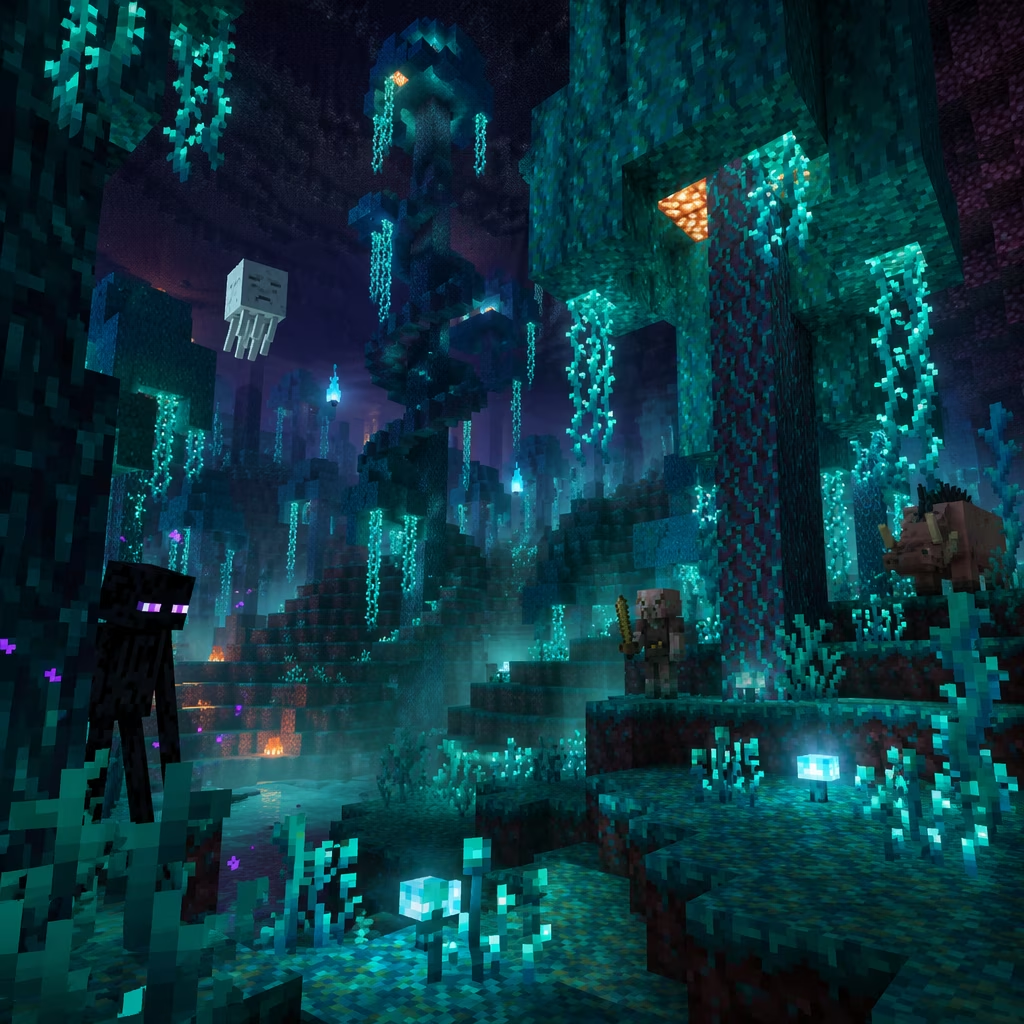
The rating itself raised a few eyebrows. PEGI slapped a '7' on it, deeming the content suitable for little tykes aged seven and up. The official description was almost comically precise: "non realistic looking violence towards fantasy characters – Pictures or sounds likely to be scary to young children – Non realistic looking violence towards characters which although children, are not very detailed." Anyone who has ever smacked a Creeper or accidentally sent a pig flying off a cliff knows that "non-realistic violence" is putting it mildly; it's more like slapstick chaos in cubic form. Oddly, PEGI also categorized the game as a "puzzle" title, which might have caused some head-scratching among purists, but let's be real – Minecraft has always been a sandbox puzzle of creativity and survival, so maybe the rating board was onto something.
The original leak pointed to a November 12 release date, which turned out to be a tad optimistic. In reality, the game landed on the Wii U eShop on December 17, 2015, with a retail disc version following in June 2016. But the PEGI slip did its job: it lit a fire under Nintendo fans who had been starved for the full Minecraft experience. After all, by late 2015, Minecraft had already sold over 70 million copies across PC, mobile, and the rival consoles. The Wii U, despite its tablet-controller gimmick and a struggling install base of just above 10 million units, had a demographic that overlapped beautifully with Minecraft's younger audience. It was a no-brainer for Microsoft – then the new steward of Mojang – to push the game onto every viable platform, even one that was widely considered a commercial flop.
What many didn't predict was how the Wii U Edition would perform on the hardware. The port, handled by 4J Studios, ran at a mostly stable 60 frames per second, a feat that surprised critics who had grown accustomed to uneven third-party support on the console. The GamePad integration was slick: players could manage their inventory and craft items without pausing the action on the TV screen, and the touchscreen made it a breeze. Yet, the Wii U's limited RAM meant that world sizes were capped, and there was no local split-screen multiplayer – a bit of a downer for couch co-op enthusiasts. Still, the game found its niche. By the end of the Wii U's lifespan in early 2017, the Wii U Edition had carved out a loyal fanbase, even if it never reached the dizzying heights of its Xbox or PlayStation siblings.
Looking back from 2026, the Wii U Edition serves as a quirky time capsule. It arrived just before Nintendo pulled the plug on the console and shifted gears to the Switch, which would later get its own Minecraft: Nintendo Switch Edition and eventually the unified Bedrock Edition. The Wii U version never received the Better Together update, so its online multiplayer remained isolated from other platforms – a walled garden that feels almost quaint in today's cross-play ecosystem. For those who still boot up their dusty Wii U consoles, that version remains frozen in time, a snapshot of Minecraft's post-Notch, pre-Bedrock era.
The PEGI leak itself has become a piece of gaming lore, a classic example of a ratings board accidentally stealing a publisher's thunder. Over the years, PEGI and the ESRB have prematurely outed everything from unannounced remasters to entire new IPs, and the Minecraft Wii U Edition was just one entry in a long list of whoopsies. It's a reminder that even in the tightly controlled world of video game marketing, sometimes the suits can't keep a secret, and the bean counters at rating boards end up being the unofficial hype men.
So, what's the takeaway in 2026? Minecraft has since exploded beyond anyone's wildest dreams, surpassing 300 million copies sold, and the Wii U is a relic pored over by retro-gaming enthusiasts. Yet, the brief window when PEGI spilled the beans captured something special: the collective giddiness of a community awaiting a game that would bridge the gap between a blocky indie darling and a console that never quite found its footing. It was a match made in heaven – or at least in a ratings database.
Comments