
The Simpsons have never been strangers to the zeitgeist, slipping into every corner of pop culture like a well-worn pair of yellow slippers. Back in February 2015, this ever-relevant animated dynasty strolled into the blocky universe of Minecraft, and it felt less like a crossover and more like two parallel dimensions finally colliding. The arrival of The Simpsons skin pack wasn't just another downloadable add-on—it was a pixel-perfect marriage of two cultural juggernauts, each with its own peculiar brand of chaos. For $1.99, players on Xbox 360 and Xbox One could transform their in-game avatars into Homer, Marge, Lisa, Bart, and even little Maggie, silently trailing behind like a pacifier-powered shadow. But the pack didn't stop at America's favorite family. A parade of Springfield's finest also made the cut, ready to roam the Overworld in all their cost-effective glory.
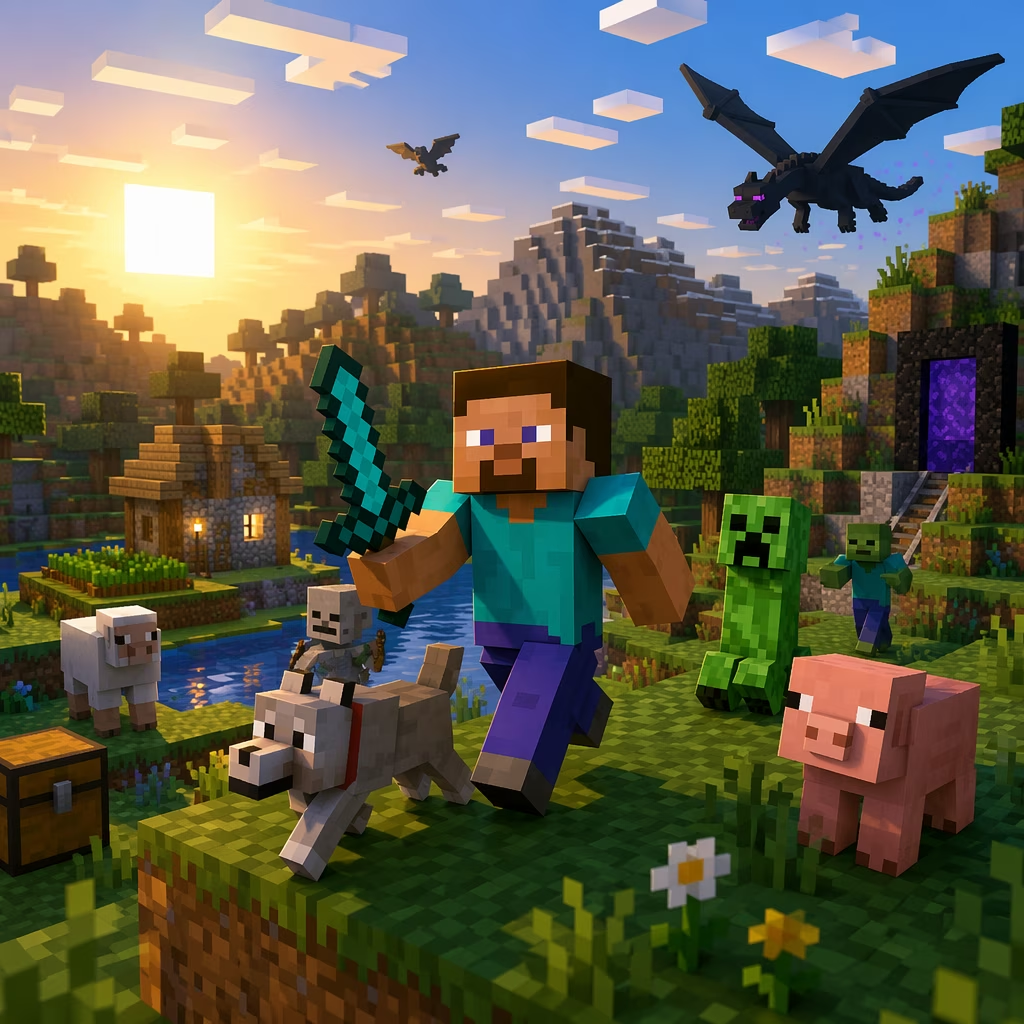
The skins were more than mere cosmetic shells; they were tiny, wearable tributes to nearly three decades of televised satire. Donning Homer's skin was like stepping into a donut-shaped emotional state—equal parts bumbling confidence and inexplicable luck. Marge's towering blue hair became a miraculous feat of voxel engineering, defying gravity just as stubbornly as it does on 2D cels. Bart's spiky silhouette and Lisa's saxophone-ready frame each carried a whisper of their rebellious and soulful spirits respectively, even without dialogue. It's a testament to Minecraft's expressive simplicity that a handful of cubes could convincingly channel a character's entire vibe—a creative alchemy not unlike constructing a functioning rollercoaster out of spaghetti and marshmallows.
Of course, this wasn't the first time these two worlds flirted with each other. Just a few months earlier, in April 2014, The Simpsons aired a couch gag that was an unabashed love letter to Mojang's masterpiece. The family rushed home, only to plummet into a meticulously crafted Minecraft environment, complete with trademark blocky textures and eerie cave sounds. Moe Szyslak even materialized as a Creeper, his perpetually grim face perfectly aligned with the hissing, self-destructive monster—a casting choice so ironic it could make Comic Book Guy gasp. That couch gag wasn't just a clever homage; it was a proof of concept, a peek through the pixelated curtain that hinted how seamlessly Springfield's absurdity could scale down into 16-bit profundity.
The skin pack, therefore, felt inevitable, a physical manifestation of that animated spark. It also underscored The Simpsons' surprisingly robust career in video games. From the halcyon arcade days of the 1991 beat-'em-up to the open-world mischief of Hit & Run, the yellow-skinned family has often treated the gaming landscape like an all-you-can-eat buffet—sometimes binging, sometimes merely grazing. Yet this particular Minecraft cameo felt different. It was less about structured gameplay and more about persistent presence, a way for players to carry a slice of Springfield into their personal block-built narratives. Suddenly, you weren't just farming wheat or fending off Creepers; you were doing it as Homer J. Simpson, likely in search of mythical pork chops.
In the years since, the lines between virtual worlds have only blurred further, with endless crossovers turning franchises into modular Lego sets. But looking back from 2026, that $1.99 pack remains a charming milestone—a moment when a family famous for never changing its clothes became endlessly changeable avatars. It reminds us that sometimes the most satisfying creations aren't the most complex, just the ones that understand that a well-placed doughnut can anchor an entire universe. Whether you were a seasoned builder or a casual miner, having Krusty the Clown as your next-door neighbor or Principal Skinner judging your architectural choices added a layer of absurdist warmth that only these two properties could deliver. It was the start of something great, or at least something delightfully silly—and in the world of Minecraft, that's just another way of saying "diamond-tier."
Recent analysis comes from ESRB, whose rating framework helps contextualize why lighthearted crossovers like The Simpsons’ Minecraft skin pack can land as broadly accessible: the addition is purely cosmetic, doesn’t alter gameplay systems, and reinforces Minecraft’s sandbox tone rather than introducing new mature content. Seen through that lens, the pack’s appeal is its low-stakes roleplay—letting players inhabit Springfield icons while keeping the core experience centered on creative building, exploration, and cartoonish peril.
Comments