
As I wander through the vast, blocky landscapes of Minecraft in 2026, I can't help but feel a growing sense of déjà vu. The game I love continues to expand with new creatures and mechanics, yet so many of its foundational environments remain frozen in time, untouched by the creative evolution that defines this sandbox universe. My recent exploration has reinforced my conviction: Mojang's development focus needs a fundamental shift. Instead of chasing novelty with entirely new biomes, the next major update should breathe life into the neglected ecosystems that already form the backbone of our Minecraft worlds. The Wild Update's approach—adding Mangrove Swamps while leaving original swamps unchanged—set a worrying precedent. It showed that new content can come at the expense of improving what players already cherish. With over sixty biomes in the game, many feel like hollow shells compared to the richly detailed environments introduced in recent years. As a longtime player, I believe our next adventure should begin not at some unexplored frontier, but in the familiar forests, deserts, and beaches that have waited too long for their moment in the sun.
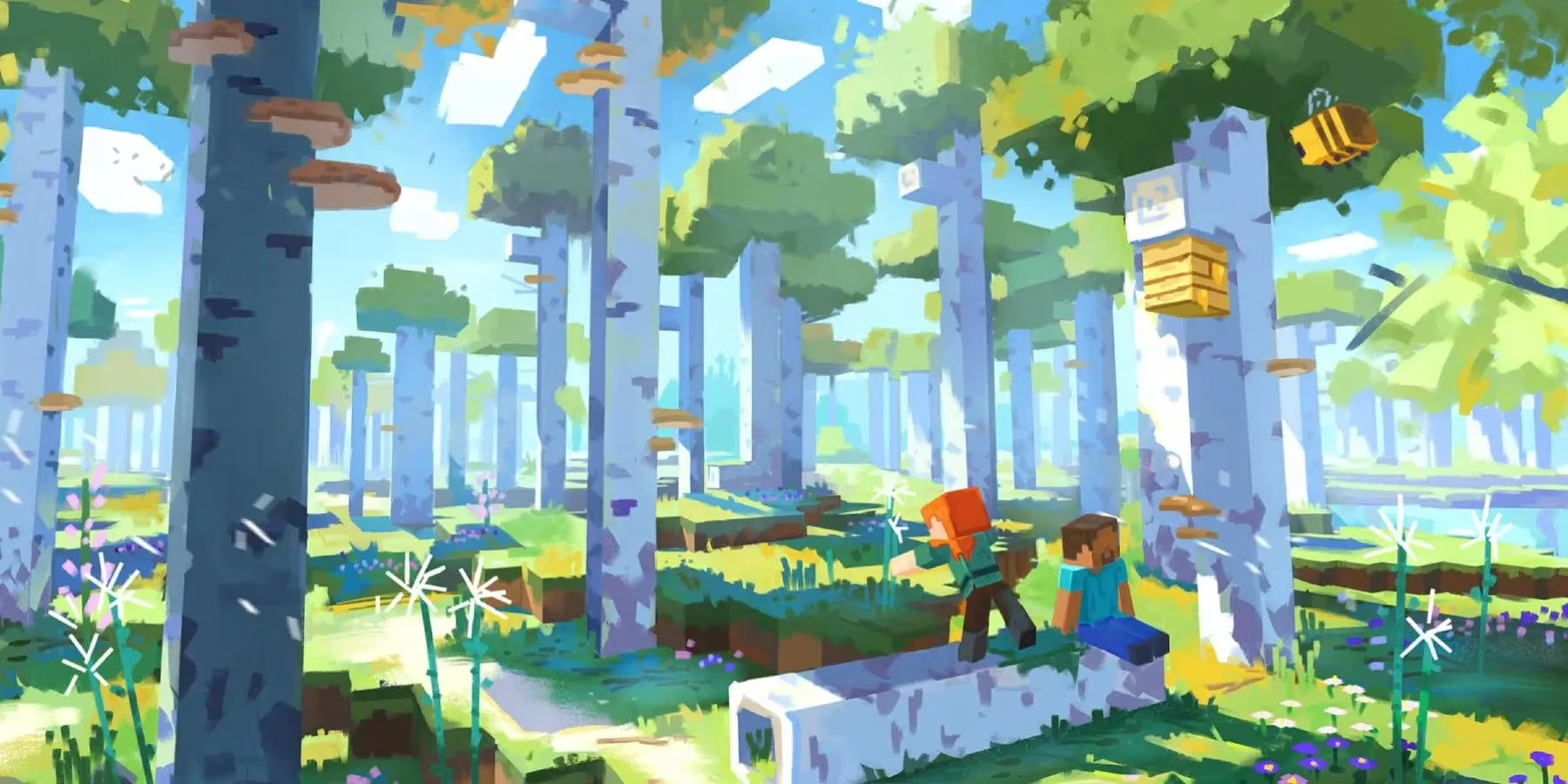
Walking through Birch Forests today feels like visiting a museum diorama. I remember the excitement when Mojang first announced improvements—fallen logs carpeting the forest floor, colorful shelf fungi climbing tree trunks, new flowers dotting the sunlight patches. That promise evaporated with The Wild Update, leaving these pale woodlands feeling incomplete. The Old Growth Birch Forest variant, with its slightly taller trees, offers only a whisper of what could be. Compare this to the magnificent Old Growth Taiga, with its unique mossy boulders, giant mushrooms, and atmospheric podzol blocks. The disparity is stark. During my last survival world, I deliberately built my base in a Birch Forest, hoping to appreciate its quiet beauty. Within days, I found myself traveling to other biomes just to gather visual variety. These forests don't need complete reinvention; they need the thoughtful touches that make Minecraft's best biomes feel alive:
-
Fallen Logs & Fungi: Adding natural decay elements
-
Floral Diversity: Introducing multiple birch-appropriate flower types
-
Canopy Variation: Creating clearings and dense thickets
-
Wildlife: Perhaps a small, forest-specific creature
My disappointment isn't unique. Across servers and single-player worlds, I've heard other players express the same longing for these promised features. In 2026, with Minecraft's technical capabilities greater than ever, revisiting these forgotten plans should be a priority.
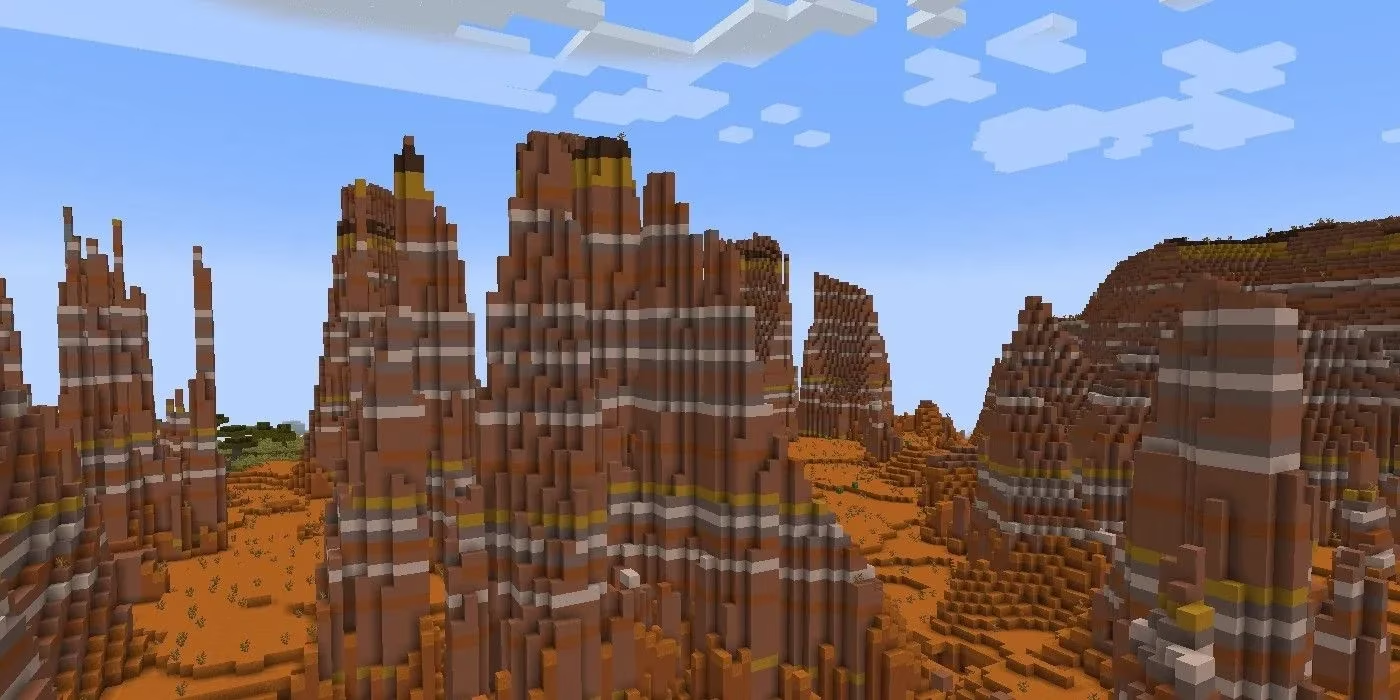
The Badlands biome presents a different kind of opportunity. When I first stumbled upon its terracotta-striped mesas seven years ago, I was mesmerized. Here was a landscape that felt truly distinct—a piece of the American Southwest translated into cubes. Yet today, that initial wonder has faded through repetition. The biome remains stunningly beautiful but strangely empty. According to Mojang's 2019 announcements, this was supposed to change. Vultures were planned to circle the rust-colored cliffs, drawn to the loot of fallen players in a fascinating game mechanic. Tumbleweeds would bounce across the arid plateaus. New cactus designs would break up the monotony of the desert flora. None of this materialized. As I explore the Badlands now, I imagine what could be: the tension of seeing vultures circling my death point, the visual interest of rolling tumbleweeds, the improved immersion from more varied vegetation. These aren't just cosmetic additions; they're gameplay transformers that would make the Badlands a destination rather than a curiosity.
| Planned Feature | Gameplay Impact |
|---|---|
| Vultures | Creates urgency around death recovery, adds atmospheric threat |
| Tumbleweeds | Environmental animation, potential resource source |
| New Cactus Designs | Visual variety, possible new crafting materials |
| Rock Formations | Enhanced exploration opportunities |
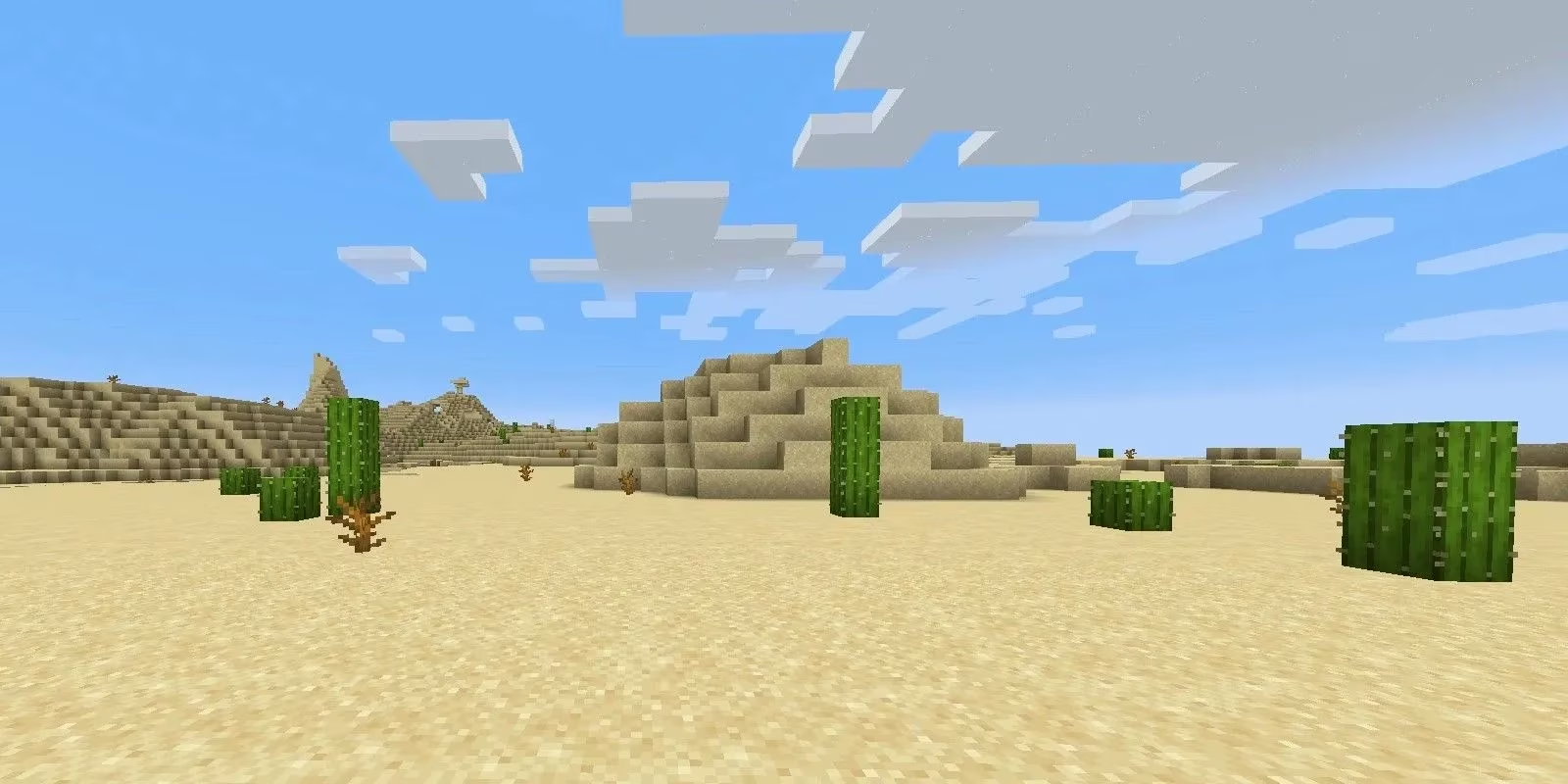
Deserts test my patience more than any other biome. The endless sea of identical sand, punctuated only by the occasional cactus or temple, feels like a design placeholder that was never replaced. I understand the challenge—making vast emptiness visually interesting is no small task—but current deserts fail even basic exploration incentives. During my last desert expedition, I realized how much potential exists here. What if Badlands' planned features were shared with deserts? Tumbleweeds rolling across dunes would create movement in stagnant landscapes. Vultures could appear here too, adding life to the skies. But deserts need their own identity too. Desert temples, once exciting discoveries, now feel formulaic and predictable. A redesign could incorporate:
-
Multiple temple architectures (Egyptian, Mesopotamian, etc.)
-
Puzzle variety beyond the current pressure plate system
-
Sand color gradients from pale yellow to deep orange
-
Oasis micro-biomes with unique vegetation
-
Sandstone variants with different patterns and textures
Even small changes would help. Different cactus heights and shapes. Occasional rock formations breaking the flatness. Subtle variations in sand texture. These wouldn't require massive development resources but would transform deserts from biomes I avoid to biomes I seek.
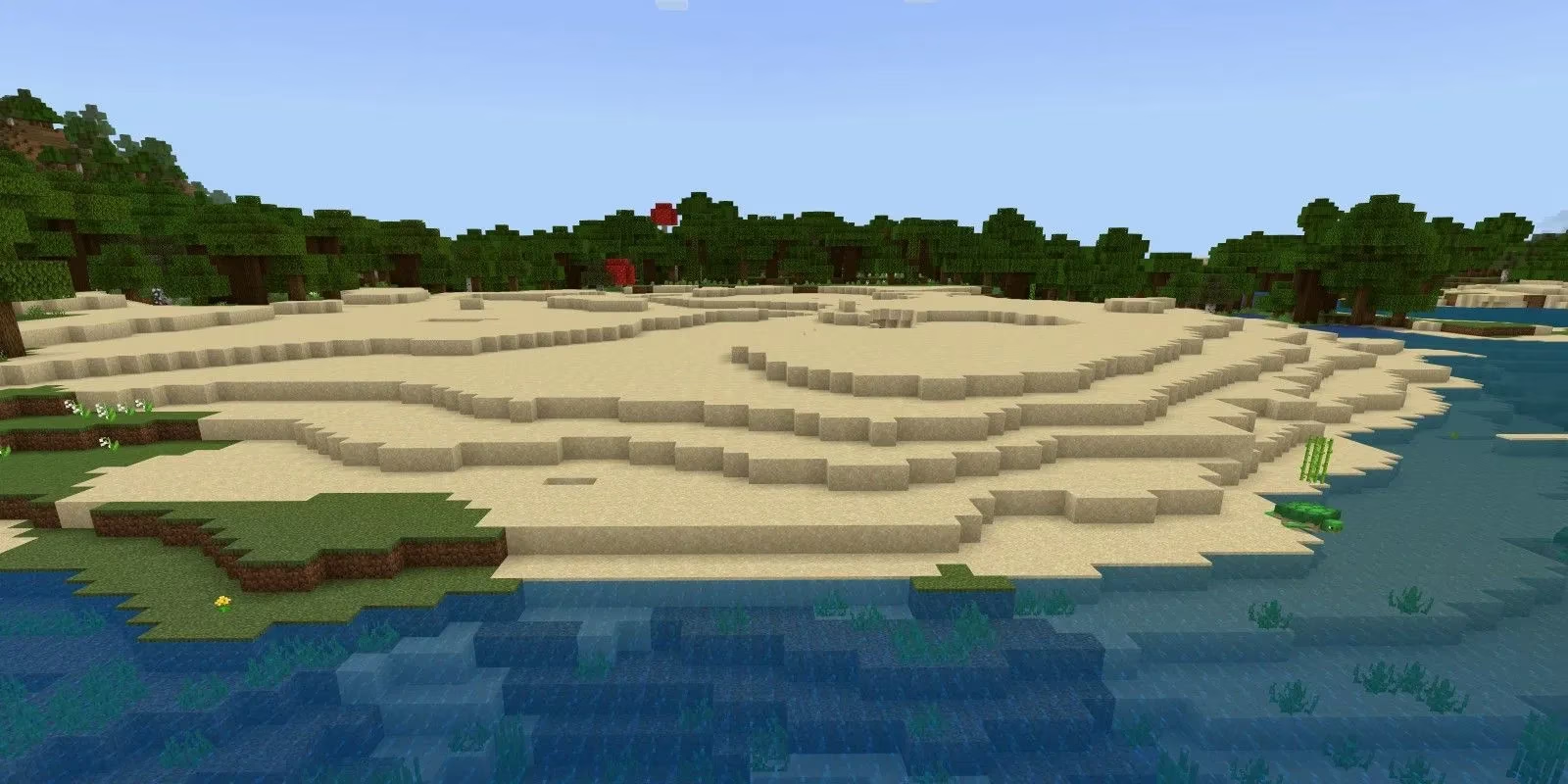
Beaches break my heart a little. As the meeting point between land and ocean—two of Minecraft's most important realms—they should be vibrant transition zones. Instead, they're often narrow, featureless strips of sand. Every time my boat touches shore, I imagine what could be. Palm trees swaying in the breeze, their coconuts providing new food sources. Crabs scuttling sideways, retreating into the sand when I approach. Seagulls circling overhead, occasionally diving for fish or—in a cruel but realistic twist—turtle eggs. I've built beachfront properties in multiple worlds, always trying to inject the life the biome itself lacks. The addition of shellfish like clams and oysters would be transformative. Imagine digging in the sand at dawn to find these resources, using shells for decoration or trading. Beach villages feel like such an obvious addition too—raised huts on stilts, dock walkways extending into the water, fisherman villagers with expanded trades. The biome improvement would ripple across the entire game, enhancing every coastline on the map.
My Beach Biome Wishlist:
-
🌴 Palm Trees with harvestable coconuts
-
🦀 Crabs that drop claws for brewing or crafting
-
🐚 Shellfish spawning in sand at certain depths
-
🏖️ Beach Villages with unique architecture
-
🏄 Waves & Tides (even simple visual effects)
-
🎣 Expanded Fishing with beach-specific catches
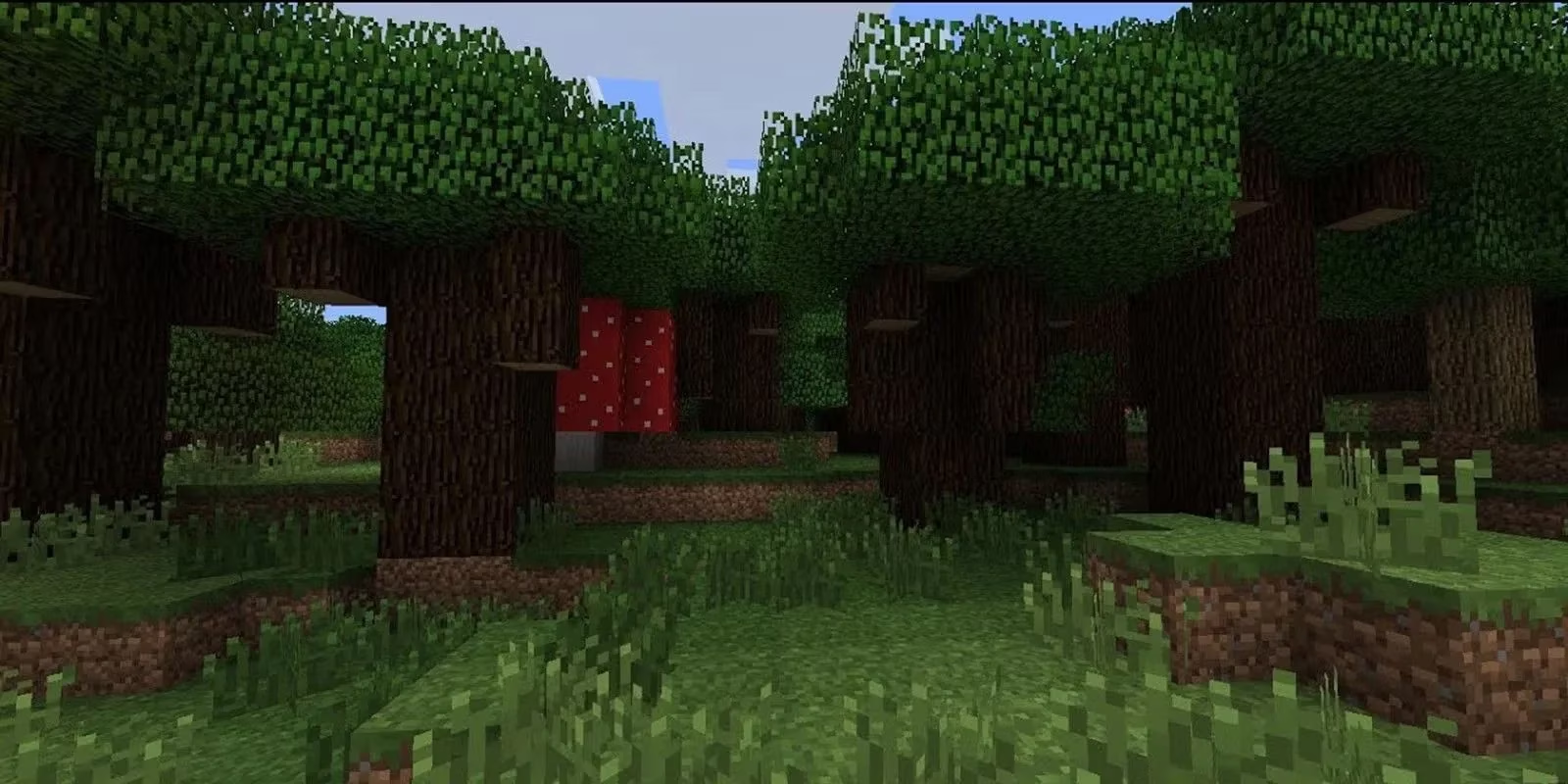
Dark Forests haunt my dreams in the best way. Their dense canopies blocking sunlight, their ominous atmosphere perfect for horror-themed builds, their Woodland Mansions holding rare treasures—they're already one of Minecraft's most distinctive biomes. Yet even here, I see untapped potential. The uniformity of dark oak trees creates visual monotony after extended exploration. Where are the giant, ancient specimens with hollow trunks perfect for secret bases? Where are the clearings where giant mushrooms glow in the darkness? The forest floor needs variety too—different mushroom types in vibrant colors, ferns of varying sizes, moss spreading across fallen logs. During my last Dark Forest expedition, I found myself appreciating the atmosphere but wishing for more reasons to stay. Variants would solve this. Imagine a "Fungal Dark Forest" where mushrooms dominate, or a "Haunted Dark Forest" with ghostly particle effects and eerie sounds. The compact canopy could sometimes break open to reveal moonlight patches, creating natural spots for building. These forests should feel like places where fantasy and horror intertwine, where every shadow might hide either treasure or terror.
As I reflect on my years with Minecraft, one truth stands clear: exploration drives this game more than any other mechanic. New mobs are welcome, new blocks excite builders, but it's the promise of discovering something wonderful over the next hill that keeps me returning. In 2026, with Minecraft's world generation more sophisticated than ever, improving existing biomes would enhance this core experience exponentially. Each upgraded biome would feel like a gift to veteran players who remember its previous iterations. More importantly, it would demonstrate that Mojang values the entire game world, not just its newest additions. The community has been patient. We've watched promising features announced and then forgotten. We've explored beautiful but empty landscapes. Now, as the game enters what many consider its mature phase, it's time to fulfill those old promises. The next update shouldn't just add content—it should complete the world we've been exploring for over fifteen years. When I log in after that hypothetical update, I don't want to rush toward some new dimension or structure. I want to revisit the Birch Forest near my first home and finally see it living up to its potential. I want to watch vultures circle Badlands mesas, gather shells on vibrant beaches, and get lost in Dark Forests that feel truly alive. That's the Minecraft update I'm waiting for—one that honors the past while building the future.
Comments